
Find the constellation Cassiopeia, which has a distinctive "W" shape (although its orientation changes at different times of year as it circles the north celestial pole). On fall evenings, look for Cassiopeia in the northeast, where its tilt makes it look like a "3", and in the winter look high in the north above Polaris, where it is oriented like an "M".
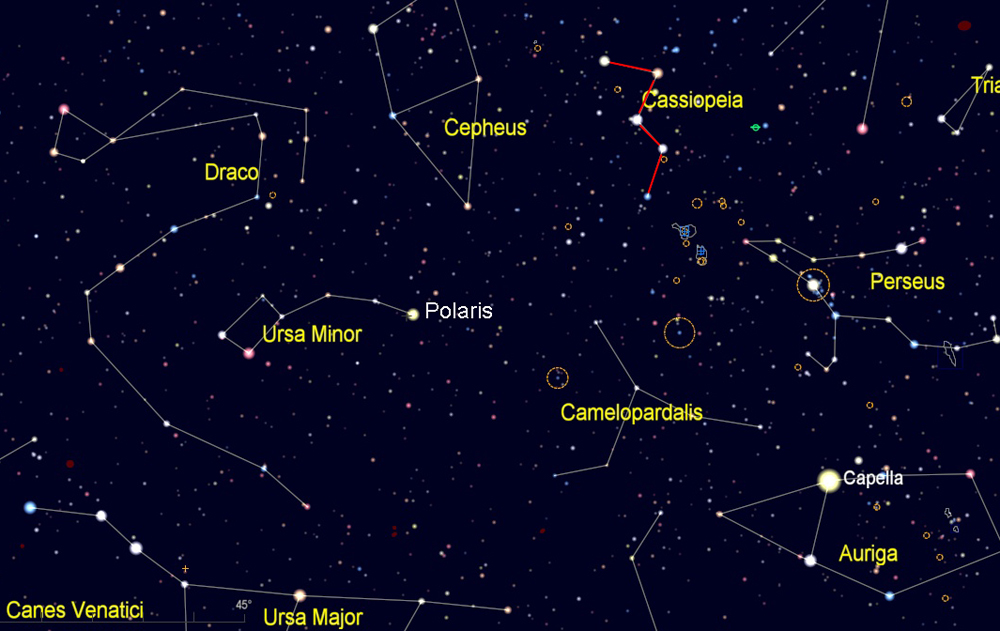
Once you have located Cassiopeia, find the two stars at the end of the W shape, Schedar and Caph. Visualize a line from Shedar to Caph, then a slight left turn and another line about half as long. This is the location of the three open clusters, with NGC 7790 in the middle of the three. After you have found them, use high magnification to see more detail in each cluster.
